
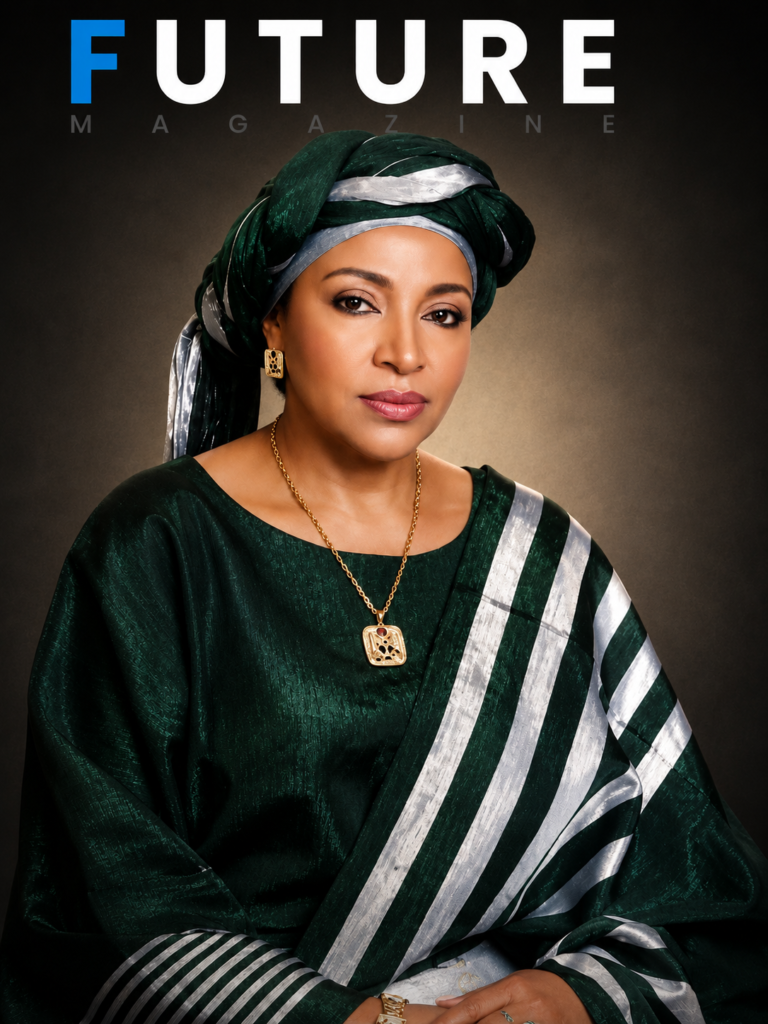

Maryam Abacha is a name that evokes strong emotions in Nigeria. As the wife of the late military Head of State, General Sani Abacha, she was the country’s First Lady from 1993 to 1998. Her tenure coincided with one of the most controversial and strictly governed periods in Nigerian history.
Yet, Maryam Abacha was not a passive figure in the shadows. She was an active, outspoken, and highly visible First Lady, earning the nickname “The Crusading First Lady” for her extensive travels and public engagements. She launched numerous social programs, from immunization drives to women’s empowerment initiatives, and played a pivotal role in establishing the National Hospital in Abuja.
Her legacy, however, is intertwined with the allegations of massive corruption that have overshadowed her husband’s regime. While she has consistently defended her husband’s record and denied the looting allegations, her life remains a subject of intense debate and scrutiny. This biography explores the life, work, and complex legacy of Maryam Abacha.
Quick Bio Table
| Attribute | Details |
|---|---|
| Full Name | Hajiya Dr. Maryam Sani Abacha (née Jiddah) |
| Known For | Former First Lady of Nigeria (1993–1998); Wife of General Sani Abacha |
| Profession | Philanthropist, Social Worker, Former First Lady |
| Nationality | Nigerian |
| Birthplace | Kaduna State, Nigeria |
| Date of Birth | March 4, 1947 (some sources say 1945) |
| Age | 79 (as of 2026) |
| Ethnicity | Kanuri |
| Height | Not publicly available |
| Marital Status | Widowed |
| Spouse | General Sani Abacha (m. 1965 – d. 1998) |
| Children | 10 (7 sons, 3 daughters): Ibrahim (deceased), Abdullahi (deceased), Mohammed, Abba, Mahmud, Sadiq, Mustapha, Zainab, Fatima Gumsu, Rakiya |
| Parents | Alhaji Sheikh Muhammad Jiddah (father), Hajiya Ya Gumsu Nasara (mother) |
| Education | Tudun Wada Primary School, U.N.A. Sabongari Primary School, Dala Girls’ Secondary School, Kano |
| Religion | Islam |
| Net Worth | Not publicly available |
Early Life and Childhood
Maryam Abacha was born Maryam Jiddah on March 4, 1947, in Kaduna State, Nigeria. She was born into a distinguished family of Kanuri heritage. Her father, Alhaji Sheikh Muhammad Jiddah, was a respected Islamic scholar, and her mother, Hajiya Ya Gumsu Nasara, was a Kanuri princess of the Borno Emirate. This background gave her a rich cultural foundation and a strong sense of identity.
Her early education began at Tudun Wada Primary School in Sabon Gari, Zaria, and continued at U.N.A. Sabongari Primary School. She later attended Dala Girls’ Secondary School in Kano, a city that would play a significant role in her life. From a young age, she distinguished herself with her eloquence and confidence, being an active member of her school’s debating society and a table tennis champion.
As a young girl, she also served as a Patrol Leader in the Girls Guide Movement, a clear sign of her budding leadership skills. Her upbringing in a home that combined Islamic scholarship with royal elegance shaped the determined and ambitious woman she would become.
Marriage to General Sani Abacha
Maryam and Sani Abacha’s story began in the early 1960s when both were students in Kano. They met through familial connections and their relationship blossomed. They married in December 1965 when Sani Abacha was a newly commissioned second lieutenant.
Their marriage was a partnership that spanned more than three decades. The couple was blessed with ten children: seven sons and three daughters. Their children include Ibrahim (deceased), Mohammed, Abba, Mahmud, Sadiq, Mustapha, Zainab, Fatima Gumsu, Rakiya, and Abdullahi (deceased).
As her husband rose through the military ranks, Maryam’s world expanded. Her marriage to an army officer exposed her to the complexities of Nigerian society and gave her a platform to pursue her interests in social work and philanthropy.
First Lady of Nigeria (1993–1998)
A New Kind of First Lady
When General Sani Abacha became the de facto President of Nigeria in 1993, Maryam assumed the role of First Lady. Unlike many of her predecessors, she was not content to remain in the background. She was an active and vocal participant in public affairs, earning her the nickname “The Crusading First Lady”.
The Family Support Programme (FSP)
One of Maryam Abacha’s most significant contributions was the launch of the Family Support Programme (FSP) in 1994. The program was designed to address the needs of Nigerian families, particularly women and children. It included various initiatives, such as:
-
The National Programme on Immunization (NPI): This initiative significantly enhanced child health and welfare across Nigeria.
-
The Family Support Basic Education Programme: A program aimed at improving access to education.
-
The Family Economic Advancement Programme (FEAP): Launched in 1997, this program expanded economic opportunities for rural families.
Healthcare Initiatives
Maryam Abacha was a passionate advocate for healthcare reform. She called for massive funding for the health sector to reduce medical tourism and make healthcare accessible to the masses.
Her most enduring legacy in this area is the National Hospital Abuja. The hospital, originally known as the National Hospital for Women and Children, was founded by Maryam Abacha. It remains a major referral hospital in Nigeria to this day.
Advocacy for Women and Peace
Maryam Abacha played a prominent role in advancing women’s rights. She led Nigeria’s delegation to the historic 1995 Beijing Conference on Women. Her powerful address at the conference earned her the unanimous election as the Pioneer Chairperson of the African First Ladies Peace Mission.
She also served as the chairwoman of the First Ladies Summit in 1997, which brought together First Ladies from across Africa and featured a peace mission project that she led.
The Nigerian Army Officers’ Wives’ Association (NAOWA)
Before becoming First Lady, Maryam Abacha had already established herself as a leader. She served as the national president of the Nigerian Army Officers’ Wives’ Association (NAOWA) from 1985 to 1990. During her tenure, NAOWA was at the forefront of the national movement for a self-reliant economy, organizing workshops, seminars, and lectures for soldiers’ wives and other citizens.
The Abacha Years and the Corruption Allegations
The period of General Sani Abacha’s rule is often remembered for the severe repression of political dissent and widespread allegations of corruption. The Abacha regime is widely believed to have looted billions of dollars from the Nigerian treasury, stashing the money in foreign bank accounts.
Maryam Abacha has consistently and passionately defended her husband’s record. She has denied the allegations of looting, insisting that there is no credible evidence to support the claims. In a 2025 interview, she stated that her husband had preserved the nation’s wealth and that it was successive governments that had looted it after his death.
She has also alleged that funds her husband secured for the nation “vanished” under subsequent administrations. These claims have been met with skepticism by many Nigerians, but they reflect her unwavering loyalty to her late husband’s legacy.
The Attempted Escape and Aftermath
Following General Sani Abacha’s sudden death on June 8, 1998, Maryam Abacha attempted to leave Nigeria with 38 suitcases filled with cash. She was caught at the airport, and the cash was confiscated. This incident became a symbol of the alleged corruption of the Abacha regime and further tarnished her public image.
Later Life and Continued Advocacy
Despite the controversies, Maryam Abacha has continued to live in Nigeria, maintaining a relatively low profile. She reportedly has residences in Maiduguri, Borno State, and the United States.
In recent years, she has received some recognition for her humanitarian work. In 2021, she was honored with an award of excellence from the Association of General Private Medical Practitioners of Nigeria.
Her family’s influence has also been sustained through various philanthropic initiatives. For instance, a three-storey multipurpose laboratory at the Maryam Abacha American University of Nigeria (MAAUN) in Kano was named after the late journalist Saleh Ashaka in 2026.
Why People Search for Maryam Abacha
People search for Maryam Abacha for several reasons:
-
Historical Curiosity: Many people are interested in learning about Nigeria’s past leaders and their families.
-
The Corruption Allegations: The Abacha regime is one of the most controversial in Nigerian history, and people are curious about the role of the First Lady.
-
Her Social Programs: Her Family Support Programme and healthcare initiatives are still discussed today.
-
Her Defiance of Looting Allegations: Her vocal defense of her husband’s record continues to generate interest.
-
The “Crusading First Lady” Persona: Her active role in public affairs during her time as First Lady makes her a notable figure in Nigerian history.
Common Misconceptions
-
She was a passive First Lady: She was, in fact, an active and outspoken public figure.
-
She is not a native of Borno State: She is a native of Borno State and a Kanuri princess.
-
She and Sani Abacha had only one child: They had ten children together.
-
Her husband did not loot the treasury: This is a matter of intense debate, with her denying the allegations.
Key Takeaways
-
Maryam Abacha was the First Lady of Nigeria from 1993 to 1998.
-
She was born Maryam Jiddah on March 4, 1947, in Kaduna State, Nigeria, to a family of Kanuri royalty and Islamic scholarship.
-
She married General Sani Abacha in 1965.
-
She was an active and outspoken First Lady, earning the nickname “The Crusading First Lady.”
-
She launched the Family Support Programme (FSP) , which included initiatives on immunization, education, and economic advancement.
-
She founded the National Hospital Abuja.
-
She was the Pioneer Chairperson of the African First Ladies Peace Mission.
-
She has consistently denied allegations that her husband looted the Nigerian treasury.
-
Her husband died in 1998, and she has since largely stayed out of the public eye.
FAQ Section
Who is Maryam Abacha?
Maryam Abacha is the widow of General Sani Abacha, the military Head of State of Nigeria from 1993 to 1998. She served as the First Lady of Nigeria during his rule.
When was Maryam Abacha born?
Maryam Abacha was born on March 4, 1947, in Kaduna State, Nigeria.
What is Maryam Abacha known for?
She is known for her role as the First Lady of Nigeria, her advocacy for women and children, her founding of the National Hospital Abuja, and her controversial legacy tied to the corruption allegations against her husband’s regime.
Did Maryam Abacha have children?
Yes, Maryam Abacha had ten children with General Sani Abacha: seven sons and three daughters.
What was the Family Support Programme?
The Family Support Programme (FSP) was an initiative launched by Maryam Abacha in 1994 to address the needs of Nigerian families. It included programs on immunization, education, and economic empowerment.
What is the National Hospital Abuja?
The National Hospital Abuja, originally known as the National Hospital for Women and Children, was founded by Maryam Abacha.
Was Maryam Abacha accused of corruption?
Maryam Abacha has faced intense scrutiny due to the massive corruption allegations against her husband’s regime. She was also caught attempting to leave Nigeria with 38 suitcases of cash after her husband’s death. She has consistently denied any wrongdoing.
Is Maryam Abacha still alive?
Yes, Maryam Abacha is still alive.
Where is Maryam Abacha from?
She is a native of Borno State, Nigeria, and was born in Kaduna.
Final Thoughts
Maryam Abacha remains a controversial and enigmatic figure in Nigerian history. Her tenure as First Lady was marked by both significant social initiatives and a deep association with the excesses of her husband’s regime. Her defenders point to her work on healthcare and women’s empowerment, while her critics view her as a symbol of the corruption that defined the Abacha years.
What is undeniable is that Maryam Abacha carved out a unique role for herself in the Nigerian political landscape. She was a First Lady who refused to stay in the background, and her legacy continues to be debated nearly three decades after she left office.
Read more Lionel Messi’s Brothers: Meet Rodrigo and Matías, the Men Behind the Legend